Teach Your Monster to Read
- 3.8
- Rating
- 1.00M
- Installs
- $8.99
- Price
 Analysis by App-foxy
Teach Your Monster to Read is one of those children’s games that makes learning feel like an activity rather than a lesson. I found its central idea easy to understand: a child guides a friendly monster while building the early skills needed for phonics and reading. That combination gives practice a purpose, which matters when a young learner would normally lose interest after a few minutes of repetition.
My overall view is positive, with an important qualification. This is best treated as a playful reading companion, not as a complete replacement for a parent, teacher, story time, or a structured literacy program. The game is especially appealing for children who respond well to characters, exploration, and small interactive challenges. It is less suitable for families looking for a quiet digital library, advanced reading material, or detailed progress reporting.
How the game turns phonics practice into play
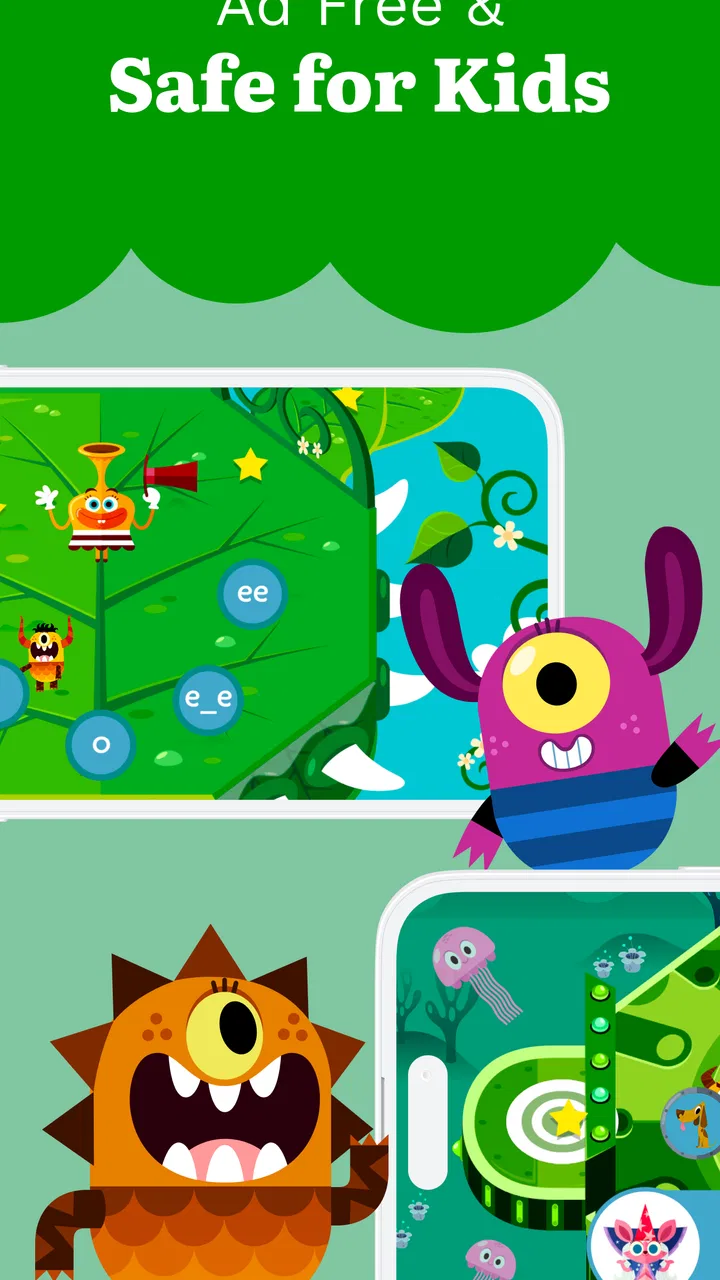
The game comes from Teach Your Monster, a developer focused on making early learning approachable for children. It belongs in the educational game category, and the design clearly puts the learning task at the center instead of adding a thin quiz to an unrelated game. The monster theme gives a child a reason to keep moving forward, while the reading work remains the meaningful activity behind that progress.
You May Also Like

 Blood Strike: 2.5 Anniversary
Blood Strike’s Loadouts Turn Every Drop Into a Tactical Gamble
A close look at Blood Strike’s custom loadouts: how fast access to signature weapons reshapes its battle royale rhythm, rewards preparation, and narrows the gap between fights.

 Pandora - Music & Podcasts
Pandora’s Music Is Easy to Start, but Harder to Recover
Pandora’s strength is its low-effort path from a seed to a station. Its weak spot is how much confidence it asks you to place in connection, setup, and quiet recovery.

 8 Ball Pool
 Is Built on Rivalries, Rematches, and Routine
A close look at the rivalries, rematches, shared routines, and unanswered safety questions that turn a quick pool match into a persistent mobile community.

 Samsung Music
’s Quiet Strength Is Playing What You Already Own
Its reach comes less from spectacle than from dependable access to a personal library. That simplicity is both the app’s strongest retention engine and its ceiling.

 AccuWeather: Weather Radar
AccuWeather Review: A Quick, Clear Forecast for Everyday Decisions
For everyday plans, the best forecast is the one you can understand quickly. AccuWeather makes rain timing, radar, and local conditions easy to act on, with a few trade-offs.

 Hill Climb Racing
Why Hill Climb Racing Still Turns Crashes Into One More Run
A tiny car, a bumpy hill and one more upgrade: Hill Climb Racing keeps resurfacing because its simple chaos makes every near-miss feel personal.
More From Our News Desk



That distinction is important. Many children’s reading apps feel like worksheets with bright colors around them. Here, the playful setting can make sound recognition and word-building feel less intimidating. A child who resists being asked to “practice phonics” may be more willing to help a monster and complete the next activity. In my experience, that emotional shift is one of the strongest reasons to consider it.
The app is designed for young learners and carries an Everyone age rating. I would still introduce it with an adult nearby, particularly during the first sessions. A child may understand the game’s goal but struggle with a sound, become distracted by the surrounding activity, or guess based on pictures instead of listening carefully. A short conversation after a session can turn a game answer into a real reading habit.
Its reach is also substantial: it has passed one million installs and holds a 4.0 average from around four thousand ratings. Those figures suggest that the concept has found a sizeable audience, while the rating also reminds me not to present it as perfect for every family. Children vary widely in their readiness, attention span, and response to phonics instruction.
The learning loop works best in short, regular sessions
I would not sit a child in front of this game expecting a long uninterrupted lesson. Its value is stronger when used in small, repeatable visits. A few minutes after breakfast, during a quiet period before dinner, or as part of a weekend reading routine can work better than one extended session that ends with frustration.
A useful routine is to let the child play independently for a little while, then ask them to explain one sound or word they encountered. That simple pause reveals whether the child is actually connecting letters and sounds or merely tapping until the game moves on. If the explanation is uncertain, I would replay that part together rather than pushing ahead.
Another practical approach is to use the game before reading a physical book with similar simple words. The digital activity can warm up the child’s attention, while the paper book shows that reading is not limited to a screen. This also helps parents notice whether a child can transfer the skill from the game into a different setting, which is more meaningful than watching a progress path advance.
The monster theme is particularly useful for children who need encouragement. A character gives the child something to care about, and that can reduce the sense that every mistake is a test. I noticed that this kind of framing is more helpful for hesitant learners than a bare sequence of flashcards. It does not remove difficulty, but it can make difficulty feel safer.
What parents should watch during play
The most valuable adult role is not taking control of every activity. Instead, I would listen for whether the child says the sounds aloud, watches the letters, and attempts the word rather than relying on visual guessing. If the child is racing through taps, slow the pace and ask them to say the sound before continuing.
It is also worth paying attention to fatigue. A young learner can appear to be playing successfully while absorbing very little near the end of a session. Stopping while the experience still feels enjoyable is a better strategy than treating completion as the only goal. The game can be revisited later, and repeated calm practice is more useful than a single demanding session.
For siblings, I would avoid turning the app into a competition. One child may already know several letter sounds while another is still developing confidence. The game works better as an individual practice space, with each child receiving help at their own level. An adult can still make it social by asking both children to find a word in a book or around the home afterward.
There is also a subtle trade-off between independence and accuracy. The game can give a child satisfying control, but independent tapping does not guarantee that the child understands why an answer is correct. I would occasionally sit beside the learner without interrupting, then ask a few gentle questions once the activity ends. That gives the child ownership while keeping the learning visible to the adult.
Where it stands beside familiar alternatives
Compared with printed phonics cards, this game offers more movement, character motivation, and immediate interaction. Cards are cheaper to reuse and easier to bring anywhere, but they can become repetitive quickly. The digital format is more inviting for a child who needs a story-like reason to practice, although it should not replace hands-on writing, speaking, and shared reading.
Compared with children’s video content, the game asks for more active participation. Watching a letter sound being demonstrated can be useful, but responding to a prompt requires the child to make a choice. That makes this a better option when the goal is practice rather than passive exposure. On the other hand, a well-chosen read-aloud video or audiobook may provide richer language and storytelling than a phonics-focused game.
Compared with broad early-learning bundles, Teach Your Monster to Read is more focused. That focus is a strength if reading readiness is the immediate priority. A larger educational suite may be better for a household that wants mathematics, drawing, science, and language in one place. I would choose this game when I wanted a child’s screen time to point clearly toward early reading rather than general entertainment.
The purchase price is $8.99, so the decision is different from trying a free activity casually. I see the one-time cost as easier to justify for a family that expects regular use and prefers a focused experience. It is harder to justify if a child rarely uses educational games, already dislikes phonics activities, or needs content beyond the earliest reading stage.
The main weakness is not excitement but fit
The biggest limitation is that a game cannot adapt perfectly to every child’s learning profile. Some children will move comfortably through the activities, while others may need slower explanations, more repetition, or a different phonics sequence. If a learner has persistent difficulty distinguishing sounds, an adult or specialist should provide more direct support instead of assuming that more game time will solve the problem.
I also think the game’s playful structure can create a misleading sense of progress. Finishing activities feels rewarding, but completion is not the same as fluent reading. Parents should check whether the child can recognize and blend sounds away from the screen. A child who performs well inside the game but struggles with a simple book may need transfer practice, not merely another round of the same activity.
Another point is the limited usefulness for children who have already moved beyond foundational phonics. Once a learner reads simple text comfortably, the game may feel too basic to hold attention. In that situation, a library app, graded reader, or writing activity could offer more valuable challenge. I would not buy it simply because a child enjoys games; the reading level has to match the purpose.
There can also be friction around shared-device routines. If a parent uses the same phone or tablet for work, messages, or entertainment, the child’s learning session may be interrupted. That is not a flaw unique to this title, but it affects whether the app becomes a dependable habit. I would set aside a predictable time and keep the session short enough that the child does not associate it with constant waiting or adult interruptions.
The current version is 5.4, and the game supports devices running iOS 9 or later. For most families with a reasonably maintained Apple device, that minimum is unlikely to be a major barrier. Still, I would check the device before purchasing, especially if the child will use an older iPad or iPhone that is no longer updated. A smooth, responsive session matters more to a young learner than it might to an adult.
Who will get the most from it
I would recommend this game first to parents of children beginning phonics, especially when the child enjoys imaginative characters and responds poorly to formal drills. It can also suit grandparents, tutors, and early-years educators who want a short digital activity to support work already happening with sounds and books.
A realistic everyday use case would be a child who comes home tired from preschool and refuses a workbook. Instead of turning reading practice into an argument, an adult could offer a brief monster session, sit nearby, and later ask the child to find one matching sound in a bedtime story. The game provides the invitation; the adult provides the connection to real reading.
I would be more cautious for a child who becomes overstimulated by games, taps rapidly without listening, or needs extensive one-to-one correction. In those cases, magnetic letters, paper cards, spoken practice, or direct teaching may be more effective. The right choice is not always the most entertaining one. A calmer tool can win when attention and accuracy are the main problems.
Families should also think about their expectations before buying. If the goal is a gentle way to reinforce early sound work, the price can make sense. If the goal is a full curriculum, detailed assessment, independent reading of stories, or support for an older struggling reader, I would look elsewhere or combine this with other resources.
My verdict after weighing the strengths and limits
Teach Your Monster to Read succeeds because it gives early phonics practice a friendly setting and a reason to continue. Its strongest feature is not simply that it is colorful or interactive; it is that the game can change the mood around reading practice. A reluctant child may approach the activity with less resistance, and that can create useful opportunities for repetition.
My recommendation comes with a clear condition: use it as part of a reading routine, not as the whole routine. Let the child play, listen to the sounds they produce, revisit difficult parts, and connect the session to books, conversation, and writing. That approach makes the game’s focused design work to its advantage instead of asking it to teach everything.
For a young beginner who enjoys games and needs encouragement with phonics, I think the $8.99 purchase is reasonable. For an advanced reader, a child who needs intensive individualized instruction, or a family seeking a broad educational platform, it is probably the wrong fit. Overall, I see it as a thoughtful and approachable early-reading tool whose real value appears when an adult turns screen practice into everyday reading.
FAQs for Teach Your Monster to Read
01What age group is Teach Your Monster to Read suitable for?
Teach Your Monster to Read is designed primarily for children aged 3 to 6 years old. It's an excellent tool for preschoolers and kindergarteners who are beginning to learn how to read. The app supports early literacy skills by turning learning into a fun and interactive experience.
02Does Teach Your Monster to Read require an internet connection?
Once downloaded, Teach Your Monster to Read can be played offline, which makes it convenient for use in various settings without relying on internet access. However, an internet connection is required for the initial download and any updates that may be released.
03Are there any in-app purchases or ads?
Teach Your Monster to Read is a completely ad-free experience, providing a safe environment for children to learn. There are no in-app purchases, ensuring that all content is accessible from the start without additional costs, making it a budget-friendly option for parents and educators.
04How does Teach Your Monster to Read engage children in learning?
The app uses vibrant graphics, fun characters, and interactive gameplay to engage children. It incorporates phonics, reading, and comprehension activities in a game-like format, which encourages children to learn at their own pace while keeping them entertained and motivated through rewards and challenges.
05Is Teach Your Monster to Read aligned with school curriculums?
Yes, Teach Your Monster to Read is developed in collaboration with leading academics and is aligned with the phonics curriculum used in schools. It complements what children learn in school, reinforcing key literacy skills through practice and repetition in a playful context.
Pros
- Engaging gameplay keeps children interested.
- Colorful graphics enhance learning experience.
- Supports early reading skills effectively.
- Easy-to-use interface for young learners.
- No in-app purchases or ads.
Cons
- Limited content for advanced readers.
- Requires internet for updates.
- Some accents not fully supported.
- Initial download size is large.
- Not available in all languages.

Teach Your Monster to Read
Gallery